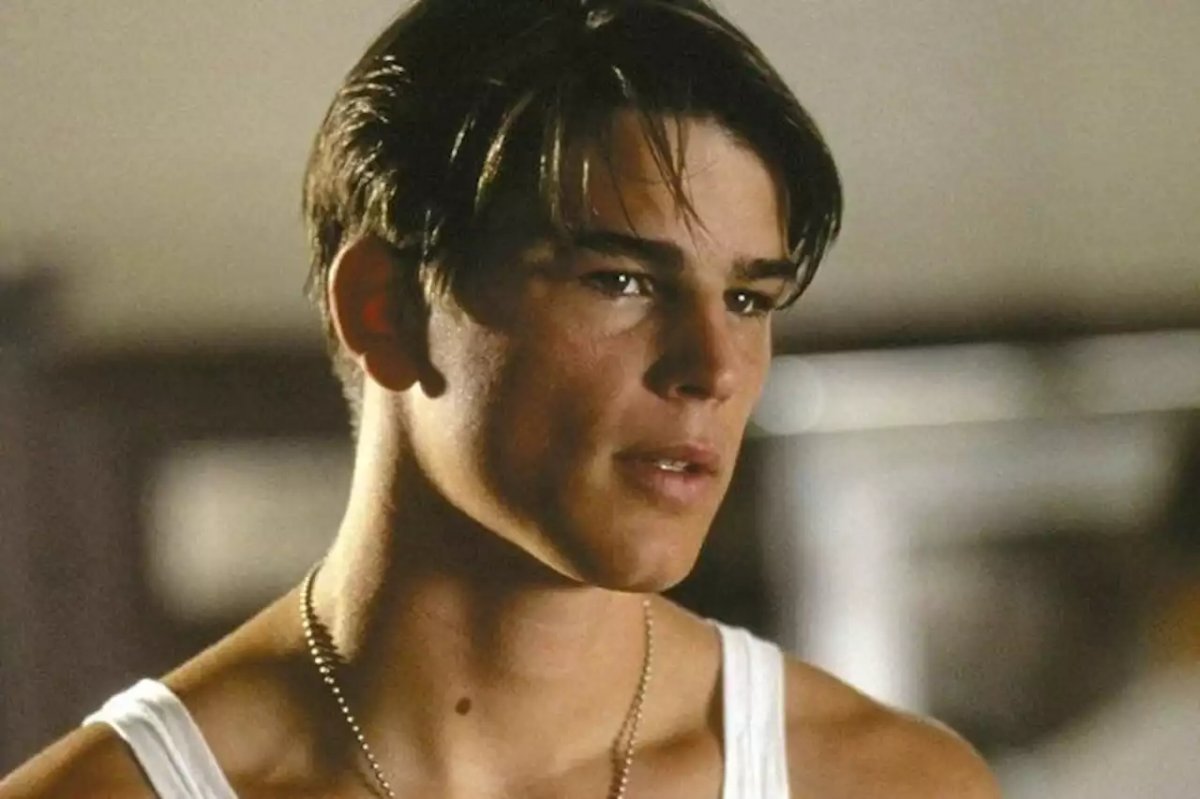
When you think of the epic scale and controversial ambition of Michael Bay’s Pearl Harbor, images of breathtaking explosions, sweeping romances, and, inevitably, the earnest faces of its young stars often come to mind. But what was it truly like behind the scenes for one of its central figures, Josh Hartnett, to embody a reluctant hero in a film of such monumental scope and historical weight?
Step into the gritty, glamorous, and often challenging world of a blockbuster that aimed to capture the unimaginable tragedy and heroism of December 7, 1941, all through the eyes of an actor navigating his biggest role yet. This isn't just a film set story; it's a deep dive into the emotional, physical, and professional journey of Josh Hartnett in Pearl Harbor.
At a Glance: Key Takeaways from Filming Pearl Harbor
- Immense Scale & Pressure: The production was one of Hollywood's largest, involving hundreds of extras, massive practical effects, and a budget pushing $140 million (before marketing). This created an intense, high-stakes environment for everyone, especially the lead actors.
- Physical Demands: Hartnett and the cast underwent rigorous military training, including boot camp and flight simulator sessions, to authentically portray their roles as pilots and soldiers.
- Emotional Depth: Despite its action-heavy nature, the film required significant emotional range, particularly in handling the devastating attack sequences and the complex love triangle. Hartnett often spoke about the weight of portraying such a somber historical event.
- Challenging Intimacy: Filming love scenes, especially those central to the film's controversial romantic plot, presented unique difficulties, demanding a balance of vulnerability and performance under Bay's demanding direction.
- Impact on Career: Pearl Harbor was a pivotal moment in Hartnett's career, thrusting him further into the global spotlight and shaping public perception of him as a leading man.
The Blockbuster Gamble: Bringing Pearl Harbor to Life
Before Josh Hartnett ever stepped onto a soundstage or into a cockpit, Pearl Harbor was already a colossal undertaking. Producer Jerry Bruckheimer and director Michael Bay, fresh off the success of Armageddon, envisioned a film that wasn't just a historical drama, but an immersive, visceral experience of one of America's darkest days. The sheer ambition was staggering: recreate the attack with unprecedented realism, blend it with a soaring romantic epic, and deliver a cinematic spectacle that would draw millions.
The production was essentially a small city. Entire naval air stations were temporarily transformed, actual WWII-era ships were utilized (or meticulously replicated), and an armada of vintage aircraft, often painstakingly restored or built from scratch, filled the skies. Bay's signature style meant a relentless pace, a quest for authentic explosions, and a dynamic, often chaotic, set where the line between reality and film began to blur. For the cast, especially its relatively young leads, this wasn't just another movie; it was an education in scale, pressure, and the art of controlled pandemonium.
Casting the Heroes: Hartnett's Path to Danny Walker
Landing a role in Pearl Harbor was a game-changer for any actor. For Josh Hartnett, who had already gained significant notice in films like The Virgin Suicides and Black Hawk Down (which would ironically reunite him with Bay shortly after), the opportunity to play Captain Danny Walker was both a massive break and a daunting challenge. Danny isn't a real historical figure but a composite, representing the brave young pilots who faced unimaginable odds. Hartnett needed to embody both the youthful exuberance of a peacetime airman and the profound trauma of a warrior.
The casting process was rigorous, searching for actors who could convey heroism without cliché, and vulnerability without weakness. Hartnett brought a quiet intensity to Danny, a character torn between his loyalty to his best friend, Rafe McCawley (Ben Affleck), and his burgeoning love for Evelyn Johnson (Kate Beckinsale). This complex emotional core, set against the backdrop of war, made Danny a compelling, if sometimes conflicted, figure. Hartnett’s presence was vital in grounding the film's larger-than-life narrative in genuine human emotion.
Brotherhood in Uniform: Hartnett and Affleck's Dynamic
The friendship between Danny and Rafe forms the foundational emotional anchor of Pearl Harbor. Their bond, forged in childhood and tested by war and love, needed to feel authentic for the audience to invest in the story. Josh Hartnett and Ben Affleck, while not lifelong friends, quickly built a rapport that translated powerfully on screen. They spent weeks together in a mock boot camp, learning military drills, flight procedures, and the camaraderie unique to service members.
This shared experience wasn't just for show; it cultivated a genuine sense of connection and understanding between the two actors. They learned to salute, march, and speak like pilots of the era, but more importantly, they learned to rely on each other, mimicking the very brotherhood their characters shared. This foundation of trust and camaraderie became crucial, especially when their characters’ friendship was put through the ultimate test of wartime romance and combat.
Navigating the Triangle: Romance, Conflict, and Tough Scenes
At the heart of Pearl Harbor's dramatic tension, and indeed much of its initial critical reception, was the controversial love triangle between Danny, Rafe, and Evelyn. This romantic entanglement, which ignites before the attack and continues through its devastating aftermath, required its actors to navigate a minefield of emotional complexity. For Josh Hartnett, portraying Danny's forbidden love for Evelyn, the girlfriend of his presumed-dead best friend, was one of the film's most challenging aspects.
Hartnett candidly spoke about the difficulties of filming the intimate scenes, particularly those with Kate Beckinsale. The intensity wasn't just about the on-screen passion; it was about the emotional baggage each character carried. Danny wrestled with guilt, Evelyn with grief and confusion, and their shared moments often felt charged with conflicting loyalties and deep-seated sadness. Hartnett described these scenes as "rough to film," not necessarily due to any physical discomfort, but because of the sheer emotional weight they demanded.
Michael Bay's directorial style, known for its rapid pace and focus on visual impact, could also be demanding during these quieter, more vulnerable moments. Actors often had to find their emotional footing quickly amidst a bustling set, trying to connect authentically while being aware of the grand scale of the production around them. Hartnett’s ability to convey Danny’s inner turmoil, his conflicting desires and sense of duty, was essential to making these difficult scenes believable and impactful, anchoring the film’s spectacle with genuine human stakes.
The Spectacle of War: Crafting the Attack Sequences
While the romance provided the emotional core, the attack on Pearl Harbor itself was the undeniable centerpiece of the film, a 40-minute sequence that redefined cinematic spectacle. For Josh Hartnett and the rest of the cast, being on set during the filming of these moments was an immersive, often overwhelming experience. Bay wasn't interested in just CGI; he wanted practical effects, real explosions, and the physical presence of destruction.
This meant building massive, historically accurate sets that could be blown up, deploying dozens of pyrotechnic experts, and even creating a vast water tank the size of several football fields to simulate the harbor. Hartnett, often in a real cockpit or amidst staged rubble, was thrown into the chaos. He described the experience as a sensory overload – the concussive force of explosions, the smell of burning fuel, the constant roar of planes (many of them actual vintage aircraft or detailed replicas flying low overhead).
Safety was paramount, given the scale of the destruction being simulated. Every explosion, every plane flyover, was meticulously choreographed and rehearsed. Yet, even with these precautions, the sheer intensity of the recreated attack left a profound impression. Hartnett had to react to forces that felt genuinely threatening, embodying the shock and terror of those caught in the historical event. It was a masterclass in controlled chaos, where actors were asked to not just perform, but to experience a sliver of the historical nightmare.
The Human Cost: Emotional Impact on Set
Beyond the pyrotechnics and the cinematic grandeur, the gravity of the subject matter weighed heavily on the cast and crew. Filming the attack on Pearl Harbor was not just about recreating a historical event; it was about honoring the lives lost and the indelible mark it left on a nation. This wasn't lost on Josh Hartnett. He often reflected on the responsibility of portraying heroism and tragedy related to such a significant historical moment.
The atmosphere on set, particularly during the filming of the attack and its aftermath, could be somber. Many crew members had personal connections to WWII veterans or Pearl Harbor survivors, lending an additional layer of reverence to the work. Hartnett found himself grappling with the emotional toll of depicting mass casualty, the frantic efforts of medics, and the sheer scale of human suffering. It forced a deep contemplation of what those soldiers, sailors, and civilians endured. This emotional immersion, while challenging, undoubtedly contributed to the raw power Hartnett brought to Danny Walker’s reactions and resilience.
Beyond the Hype: Hartnett's Post-Pearl Harbor Reflections
Pearl Harbor was a box office behemoth, but it also became a lightning rod for critical debate. Some lauded its spectacle and patriotic fervor, while others lambasted its historical inaccuracies and the clunky love triangle. For Josh Hartnett, navigating the aftermath of such a high-profile, polarizing film was a significant part of his journey as an actor. The film cemented his status as a leading man, opening doors to diverse roles, but it also came with intense scrutiny.
Hartnett has since spoken about the experience with a degree of philosophical detachment, acknowledging both the immense learning opportunity it presented and the pressures of being part of such a colossal production. He learned invaluable lessons about the mechanics of large-scale filmmaking, working with a demanding director like Michael Bay, and the sometimes-blurry line between historical accuracy and dramatic license. While he often shied away from the intense media glare that followed, Pearl Harbor undeniably shaped his career trajectory, propelling him to a level of stardom that few actors achieve. It was a moment that redefined blockbuster cinema, and Hartnett was right at its heart, grappling with its ambitions, its criticisms, and its undeniable cultural impact.
Debunking Myths & Common Questions About Filming Pearl Harbor
Big movies like Pearl Harbor often generate their own lore. Let's tackle some common questions and clear up a few misconceptions about what it was really like to make this epic film.
Was the entire attack sequence created with CGI?
Absolutely not. While Pearl Harbor certainly utilized groundbreaking visual effects for its time, Michael Bay insisted on as many practical effects as possible. This meant real explosions, actual vintage aircraft (or detailed replicas) flying, and elaborate physical sets being destroyed. The combination of practical effects, miniatures, and CGI allowed for a seamless, incredibly immersive sequence that felt visceral and real.
How accurate was the film's portrayal of history?
This is perhaps the most debated aspect of Pearl Harbor. While the film meticulously recreated many historical details of the attack itself, particularly the types of planes, ships, and the sequence of events, its romantic subplot and some characterizations took significant dramatic liberties. The filmmakers' intent was often to capture the spirit and emotional impact of the event rather than providing a documentary-level historical account. This distinction often sparks lively discussions among historians and viewers alike.
Did the actors really fly those planes?
No, Josh Hartnett and Ben Affleck, while extensively trained for their roles, did not actually pilot the vintage aircraft seen in the film's intense dogfights and attack sequences. Those flights were performed by highly skilled stunt pilots. The actors were often filmed in custom-built cockpits, sometimes even suspended from cranes or placed on motion-controlled gimbals, to create the illusion of them being in the air. Their training focused on looking authentic while simulating flying, understanding the mechanics, and performing convincing aerial maneuvers from a stationary position.
Were there any major injuries on set given the scale of the explosions?
Despite the immense scale of the practical effects and the dangerous nature of simulating war, the production maintained a remarkably strong safety record. Rigorous protocols, extensive rehearsals, and a large team of safety experts were on hand for every major sequence. While minor bumps and bruises might occur on any film set, no major, life-threatening injuries were reported among the main cast or crew during the filming of the most explosive scenes, a testament to the careful planning involved.
The Enduring Legacy: Why Pearl Harbor Still Resonates
More than two decades after its release, Pearl Harbor remains a topic of conversation, a film that continues to divide and captivate audiences. Its legacy is complex, marked by both critical derision and undeniable commercial success. But why does it still resonate, and why do people still seek out the stories of its making, like what it was like behind the scenes for actors like Josh Hartnett?
Part of its enduring appeal lies in its sheer spectacle. Regardless of one's feelings about the plot, the recreation of the attack is a technical marvel that pushed the boundaries of filmmaking for its time. It’s a powerful testament to the ambition of blockbuster cinema and a reminder of how much effort goes into creating such immersive visual experiences. It also serves as a gateway for many younger viewers to learn about a pivotal moment in American history, sparking curiosity that might lead them to deeper historical understanding.
Furthermore, the film taps into universal themes of friendship, love, sacrifice, and resilience in the face of overwhelming tragedy. While the romantic elements might be polarizing, they speak to the human need for connection and hope even in the darkest of times. It’s a grand, old-fashioned epic that, for all its flaws, tried to capture something monumental. It continues to be rewatched, discussed, and analyzed, proving that even controversial films can carve out an indelible place in cinematic history.
Reliving the Epic: A New Lens for Your Next Viewing
Understanding the intricate dance of challenges, triumphs, and intense emotions behind the making of Pearl Harbor offers a completely new lens through which to experience the film. When you next watch it, take a moment to look beyond the spectacle and consider the human element that brought it to life. Think about Josh Hartnett's journey: the rigorous training, the emotional weight of portraying a hero caught in a devastating conflict, and the personal and professional growth that came from being part of such an enormous production.
Pay attention to the subtle glances, the quiet moments of camaraderie, and the raw expressions of fear or grief amidst the explosions. These are the details that show the actors' dedication to grounding a grand narrative in authentic human experience. Re-watching with this knowledge transforms the viewing experience from passive consumption to an appreciation of the immense craft, courage, and sheer human endeavor that went into creating a film as ambitious and enduring as Pearl Harbor. It’s a reminder that behind every frame of cinematic glory, there are countless stories of the people who made it happen.