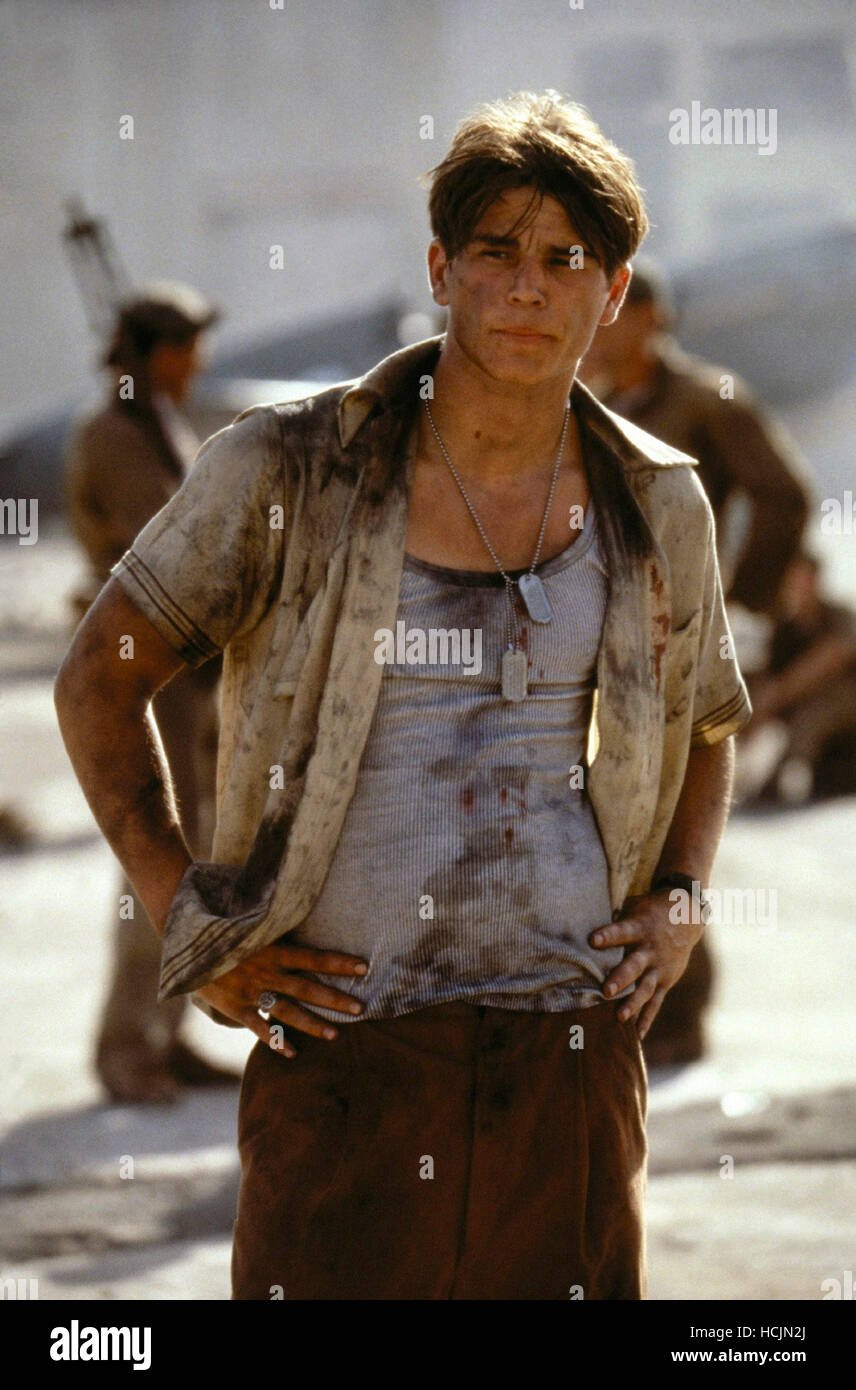
The year 2001 brought with it one of Hollywood's most ambitious war-romances, Pearl Harbor, a film that would indelibly stamp its mark on the careers of its young leads. Among them was Josh Hartnett, who stepped into the pivotal role of Danny Walker in Pearl Harbor, a fighter pilot caught in the swirling chaos of war and a heart-wrenching love triangle. His portrayal offered a nuanced look at heroism, friendship, and the personal cost of conflict, making his character central to the film's emotional core.
From its massive scale to its intense dramatic beats, Pearl Harbor quickly became a cinematic touchstone of the early 2000s, profoundly impacting Hartnett's burgeoning career and his subsequent relationship with Hollywood.
At a Glance: Josh Hartnett's Role in Pearl Harbor
- Character: Captain Danny Walker, a brave U.S. Army Air Corps fighter pilot.
- Relationship: Best friend to Rafe McCawley (Ben Affleck) and the eventual love interest of Evelyn Johnson (Kate Beckinsale).
- Film Type: A sweeping war-romance set against the backdrop of the 1941 attack on Pearl Harbor.
- Hartnett's Experience: Felt "trepidatious" joining the large-scale Michael Bay production, described it as a "glossy, romanticized spectacle."
- Impact on Career: Led to a sudden surge in fame at age 21, making him "uncomfortable" with the "MTV celebrity moment" and industry expectations.
- Post-Film: Immediately followed by the critically acclaimed Black Hawk Down, offering a stark contrast in directing styles and narrative focus despite both being war films produced by Jerry Bruckheimer.
Danny Walker: A Fighter Pilot in a World Adrift
In Pearl Harbor, Josh Hartnett brought to life Captain Danny Walker, a character embodying the spirit of brotherhood and the agony of wartime choices. Danny is introduced as the steadfast best friend to Ben Affleck's daring Rafe McCawley. Their bond, forged in childhood and tested in the skies, forms the emotional bedrock of the film. You see their loyalty, their playful rivalry, and their unwavering support for one another, painting a vivid picture of the camaraderie among pilots preparing for an inevitable war.
When Rafe volunteers for the Eagle Squadron in Britain, leaving behind his sweetheart, nurse Evelyn Johnson (Kate Beckinsale), Danny steps into a complicated space. His character becomes a pillar of support for Evelyn, and as fate and tragedy intertwine, their platonic bond slowly, almost reluctantly, blossoms into something more. This romantic subplot, often criticized for overshadowing the historical gravitas of the Pearl Harbor attack, placed Danny at the heart of the film's "romance" component. Hartnett conveyed Danny's internal struggle with grace—his loyalty to Rafe warring with his growing affection for Evelyn. It's a classic Hollywood dilemma, amplified by the looming threat of war.
The narrative arc of Danny Walker sees him not just navigating a love triangle, but also confronting the horrors of battle. His actions during the Japanese attack on Pearl Harbor itself are heroic, as he takes to the skies to defend against the surprise assault. Later, he participates in the Doolittle Raid, a daring retaliatory strike against Japan. Danny's character symbolizes the sacrifice and bravery of those who served, his personal drama woven into the fabric of a national tragedy. Hartnett's portrayal helped humanize the immense scale of the conflict, making the audience invest in the personal stakes amidst the spectacle.
Stepping into the Spectacle: Hartnett's Trepidation with Pearl Harbor
For a young actor like Josh Hartnett, then only 21, joining the colossal production of Pearl Harbor was both an incredible opportunity and a source of significant apprehension. The film was directed by Michael Bay, known for his high-octane, visually grandiose style, and produced by Jerry Bruckheimer, a titan of blockbuster cinema. Hartnett himself described feeling "trepidatious" about taking on such a large-scale project.
He was acutely aware of the film's ambition: to be a "glossy, romanticized spectacle" designed to captivate audiences who had flocked to other epic romances like Titanic. While Pearl Harbor delivered on the spectacle, complete with stunning action sequences and a sweeping score, Hartnett's behind-the-scenes experience wasn't entirely comfortable.
The film's release catapulted him into an unprecedented level of fame. He suddenly found himself in an "MTV celebrity moment," a whirlwind of media attention and industry expectations that felt jarring. He confessed to feeling "uncomfortable" with how the industry began to define him based on this singular, massive role. This early brush with intense, widespread celebrity profoundly shaped his perspective on the film industry and the challenges of instant fame. It was a defining moment that made him question the path he was on, even as his career seemed to be skyrocketing.
From Pearl Harbor to Black Hawk Down: A Tale of Two War Films
Interestingly, immediately following Pearl Harbor, Josh Hartnett found himself immersed in another high-profile war film: Ridley Scott's Black Hawk Down. Both films were produced by Jerry Bruckheimer, but the similarities, for Hartnett, ended there. He was cast first in Black Hawk Down and expressed eagerness to work with the legendary Ridley Scott.
The contrast between the two experiences couldn't have been starker. Hartnett keenly observed that despite both being "war movies produced by Bruckheimer," they had "entirely different directing styles" and little "narrative or aesthetic comparison."
Michael Bay's approach to Pearl Harbor leaned heavily into cinematic grandeur, dramatic slow-motion, and a romanticized vision of heroism. It prioritized emotional arcs and visual splendor, creating an almost operatic feel, fitting for Michael Bay's distinct filmmaking style. The attack on Pearl Harbor itself, while harrowing, was framed within a larger, more conventional blockbuster narrative structure.
In contrast, Ridley Scott's Black Hawk Down, based on the 1993 Battle of Mogadishu, was grittier, more visceral, and focused on the brutal realism of modern warfare. It was an ensemble piece, eschewing individual romantic subplots for a raw, almost documentary-like portrayal of soldiers fighting for survival. This difference highlights Ridley Scott's approach to direction, which often favors intense realism and a deep dive into human endurance. For Hartnett, moving from one to the other was a masterclass in varied filmmaking, demonstrating that even within the same genre and production team, the director's vision dictates everything. This shift underscored his growing understanding of the nuances of his craft and the varying demands of different projects.
The Weight of the Spotlight: A Career Redefined
The whirlwind of fame that followed Pearl Harbor left a lasting impression on Josh Hartnett. Born in 1978, he had begun his acting career in 1997, quickly landing roles in Cracker, Halloween H20: 20 Years Later (1998), and The Faculty. He also took on the lead in O (2002), an adaptation of Shakespeare's Othello. These roles had established him as a rising star, but Pearl Harbor propelled him into a different stratosphere.
However, this newfound global recognition came with a personal cost. Hartnett felt uncomfortable with the rapid escalation of his celebrity and the feeling of being defined by the industry. He made a conscious decision to step away from the relentless "Hollywood machine" and the pressure to maintain a certain level of stardom. This wasn't a sudden flight but a deliberate choice driven by a desire for more meaningful work and a personal life outside the intense glare of the spotlight.
In the early 2000s, at the peak of his post-Pearl Harbor fame, Hartnett notably turned down several high-profile roles, including Superman and other superhero parts. His reasoning was clear: he didn't want the long-term commitment and the typecasting that often comes with such iconic characters. He openly stated that staying at the very top of Hollywood felt like a "shortcut to unhappiness," a profound insight from someone who had experienced that pinnacle firsthand. This reflective stance on exploring actors' career choices led him to take a significant break from mainstream acting to reconsider his path.
This period of introspection allowed him to prioritize his well-being and re-evaluate his relationship with his craft. He moved away from Los Angeles, opting for a quieter life, and chose roles based on artistic merit rather than commercial appeal. His decision to intentionally slow down and choose substance over celebrity demonstrated a rare wisdom for someone so young in such a demanding industry.
Beyond the Blockbuster: Meaningful Roles and a Personal Path
Josh Hartnett's journey post-Pearl Harbor and his self-imposed hiatus solidified his reputation as an actor who prioritized artistic integrity over blockbuster fame. While his absence from major Hollywood productions was noted, he never truly stopped acting. Instead, he sought out independent films and international projects, honing his craft away from the relentless scrutiny of the American mainstream.
His return to more prominent roles has been a testament to his talent and the enduring appeal of his thoughtful performances. You've seen him make a compelling career comeback in recent years, proving his versatility and magnetism. Perhaps most notably, he delivered a memorable performance as Ernest Lawrence in Christopher Nolan's critically acclaimed Oppenheimer. This role showcased his ability to inhabit complex historical figures with gravitas and nuance, far removed from the romantic hero of Pearl Harbor.
Beyond Oppenheimer, Hartnett has continued to take on diverse projects, including a chilling turn as a serial killer in the film Trap and an appearance in Fight or Flight. These choices underscore his commitment to meaningful roles that challenge him and offer a rich narrative, rather than simply chasing box office success.
In his personal life, Hartnett has found stability and joy. He has been in a relationship with actress Tamsin Egerton since 2012, and together they have built a life in the UK with their two children. This personal grounding has undoubtedly contributed to his renewed focus on fulfilling roles and a career path that aligns with his values, a significant contrast to the intense, career-defining moment of a huge war-film epic like Pearl Harbor.
The Enduring Reflection of a Pilot's Story
Josh Hartnett's portrayal of Danny Walker in Pearl Harbor remains a significant chapter in his career, a role that brought him immense fame while simultaneously prompting a profound recalibration of his professional trajectory. Danny Walker was more than just a character in a movie; he was a symbol of friendship, sacrifice, and complicated love amidst the chaos of war, brought to life by an actor grappling with his own rapid ascent to stardom.
Looking back, Hartnett's reflections on Pearl Harbor are not of regret, but of a formative experience that, while initially overwhelming, ultimately guided him toward a more authentic and personally satisfying path. The film, for all its spectacle and box office success, served as a crucial catalyst for an actor who chose to define his career on his own terms. His journey from the glossy set of Pearl Harbor to the critically acclaimed ensemble of Oppenheimer is a compelling narrative in itself, proving that true success often lies not in chasing the loudest applause, but in finding one's own quiet, meaningful rhythm.
To understand the full scope of his work and personal philosophies, Learn more about Josh Hartnett's remarkable journey beyond this pivotal role. His choices after Pearl Harbor speak volumes about an artist determined to prioritize substance, both in his craft and his life, charting a course that is uniquely his own.