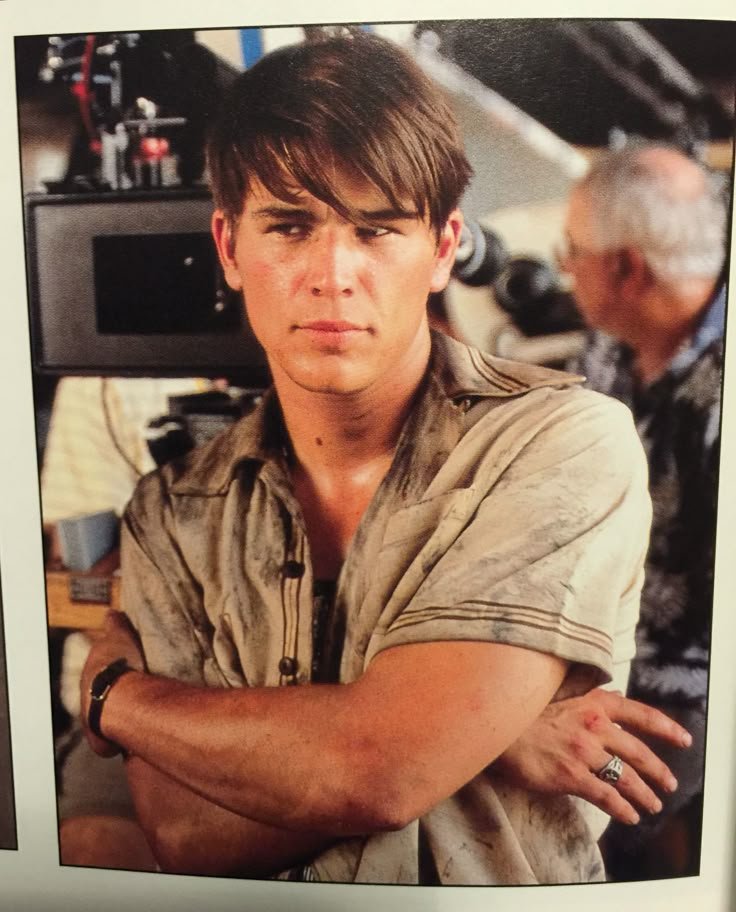
Even two decades later, the mention of "Pearl Harbor" immediately conjures images of grand-scale destruction, sweeping romance, and the intense performances that anchored Michael Bay's 2001 epic. Among its star-studded cast, Josh Hartnett's portrayal of fighter pilot Danny Walker stands out, embedding itself in the collective memory of a generation. His work in the film, a blend of heroic action and poignant emotional depth, offered a complex glimpse into the challenges and triumphs of a young actor navigating a colossal cinematic machine.
This isn't just a look back at a film; it's an examination of how a talented performer, initially "trepidatious" about joining such a massive, post-"Titanic" romantic epic, managed to carve out memorable moments that endure. We'll delve into the specific scenes and broader context that made Hartnett's contribution to "Pearl Harbor" more than just another action hero turn, exploring the nuances that sometimes get lost beneath the film's considerable spectacle.
At a Glance: Josh Hartnett's Impact in "Pearl Harbor"
- A Reluctant Hero: Hartnett's portrayal of Danny Walker brought a grounded vulnerability to the film's otherwise larger-than-life narrative.
- The Heart of the Love Triangle: Danny's quiet strength and loyalty served as the emotional bedrock of the film's central romantic conflict.
- Navigating Spectacle: Hartnett delivered nuanced moments despite director Michael Bay's focus on grand action sequences.
- A Career Defining Role (and Challenge): "Pearl Harbor" catapulted Hartnett to sudden fame at 21, shaping his approach to celebrity and future roles.
- Contrast in Craft: The film highlighted his distinction between "glossy romance" and the "gritty realism" he sought in projects like "Black Hawk Down."
- Memorable Moments: From pre-attack camaraderie to the chaos of the raid and the quiet pain of loss, Hartnett's scenes resonated deeply.
Stepping into the Colossus: The Weight of a Blockbuster
Josh Hartnett arrived at "Pearl Harbor" already a rising star, but nothing could quite prepare him for the scale of Michael Bay's ambition. The film was conceived as a monumental war-romance, designed to capture the commercial magic of "Titanic" by blending historical tragedy with an emotionally charged love story. For Hartnett, then just 21, the prospect was daunting. He openly admitted feeling "trepidatious" about joining a project so vast, one that he knew would put him squarely in the public eye.
This apprehension wasn't unfounded. The film's commercial success was enormous, instantly transforming Hartnett into a global celebrity. This sudden fame, he later reflected, came with significant challenges to his self-identity in an "MTV" era where public perception often defined actors. His decision to embrace roles that avoided the "Hollywood type" in subsequent years can be directly traced back to this formative experience, which you can read more about in our deeper dive into Josh Hartnett in Pearl Harbor.
Danny Walker: The Grounded Heart of a War Epic
Hartnett’s character, Danny Walker, is introduced as the loyal, somewhat quieter best friend to Ben Affleck's daring Rafe McCawley. They are both ace fighter pilots, bonded by brotherhood and a shared love for the skies. From the outset, Danny embodies a groundedness that provides a crucial counterpoint to Rafe's impulsiveness and the film's overall tendency towards grandiosity.
His early scenes establish his character swiftly: a skilled pilot, a steadfast friend, and a man capable of deep affection. We see him in playful banter with Rafe, demonstrating their easy camaraderie, and later, witnessing the subtle admiration he holds for Evelyn Johnson (Kate Beckinsale), Rafe's love interest. It's a performance built on quiet observation and understated emotion, which pays dividends when the narrative inevitably throws Danny into the heart of a devastating love triangle.
Iconic Scenes: Moments That Defined Danny Walker
Despite the film's immense scale and Bay's signature focus on spectacle, Hartnett managed to deliver several performances that made Danny Walker truly unforgettable. These moments allowed him to flex his dramatic muscles, often communicating profound emotion with just a look or a subtle shift in demeanor.
The Friendship Forged in Flight
Before the storm, we witness the unbreakable bond between Danny and Rafe. Scenes of them dogfighting playfully in their P-40s, sharing laughs, and even engaging in a friendly rivalry over Evelyn, set the foundation. Hartnett's easy chemistry with Ben Affleck makes these early interactions believable and poignant. You feel the genuine affection between these two men, making the later complications of their relationship all the more impactful.
One particularly memorable sequence showcases their youthful exuberance as they "buzz" the local hospital, prompting a scolding from Evelyn. Hartnett's cheeky grin and genuine joy in these moments paint a picture of innocence soon to be shattered. He perfectly conveys the carefree spirit of a pilot before the true horrors of war descend.
The Love Triangle's Unsettling Dawn
The seeds of the romantic conflict are sown early, but they truly blossom after Rafe is presumed dead. Danny, consumed by grief for his best friend and burdened by the responsibility of comforting Evelyn, slowly finds himself falling for her. Hartnett plays this transition with a delicate touch, never rushing the shift in his character's affections.
His performance in scenes where he tries to console Evelyn is particularly strong. There's a tangible conflict in his eyes: the pain of losing Rafe, the desire to be a supportive friend, and the dawning, unwelcome realization of his own feelings for her. It's a testament to Hartnett's ability to convey internal struggle, making Danny's burgeoning relationship with Evelyn feel less like a betrayal and more like a desperate reach for connection amidst shared trauma. These moments highlight his capacity for portraying complex emotional states, a skill he would further refine in subsequent, more character-driven projects.
Surviving the Storm: Pearl Harbor Under Attack
The attack on Pearl Harbor itself is, understandably, the film's centerpiece, a masterclass in cinematic chaos. Amidst the explosions and falling planes, Hartnett's performance provides a vital human anchor. As the Japanese planes descend, Danny and Rafe, who has miraculously returned, find themselves scrambling to get airborne.
Hartnett's portrayal of Danny in these sequences is a visceral mix of raw fear, courageous determination, and adrenaline-fueled instinct. He's not a stoic, unflappable hero; he's a young man fighting for his life and his country. Watching him take down enemy planes, his face grim and focused, you feel the immediate danger and the sheer terror of the situation. It’s a powerful demonstration of his ability to anchor a scene with intense emotional realism, even amidst overwhelming special effects. He conveys the horror and heroism without resorting to overt grandstanding, opting instead for a portrayal of a man simply doing what he must to survive and protect.
The "Parachute Scene": An Unintended Moment of Awkwardness
Among the intimate moments between Danny and Evelyn, one scene has gained particular notoriety due to Hartnett's personal reflections: the "parachute scene." This pivotal romantic encounter, meant to solidify their bond, became an embarrassing career moment for the actor. Kate Beckinsale's one-year-old daughter and partner unexpectedly being on set during filming created a deeply uncomfortable environment for Hartnett.
This anecdote offers fascinating insight into the challenges actors face, even in a highly controlled environment. The need to convey deep intimacy while feeling acutely awkward undoubtedly added a layer of complexity to Hartnett's performance. While the scene itself is designed to be tender and heartfelt, knowing the behind-the-scenes discomfort sheds a different light on the vulnerability he projected. It underscores how an actor's personal experience can subtly influence their on-screen presence, even if the audience remains unaware. Such incidents reveal the human element behind the polished façade of Hollywood blockbusters.
The Doolittle Raid: Vengeance and Valour
Following the devastating attack, Danny and Rafe volunteer for the perilous Doolittle Raid, a retaliatory strike against Japan. These scenes allow Hartnett to showcase Danny's renewed sense of purpose and a more hardened resolve. The easy camaraderie of pre-Pearl Harbor is replaced by a grim determination.
Hartnett's performance here is characterized by a quiet intensity. As he prepares for the mission and executes the dangerous bombing run, you see a man who has matured quickly through unimaginable loss and trauma. His actions are less about personal glory and more about collective vengeance and honor. The bond between Danny and Rafe, though strained by the love triangle, is re-emphasized through their shared mission, culminating in an emotional climax that solidifies Danny's heroic journey.
Michael Bay's Vision vs. Hartnett's Craft: A Tense Balance
The creative tension between director Michael Bay’s preference for "spectacle rather than intimate moments" and Hartnett's desire to avoid "Hollywood type" roles is a fascinating aspect of "Pearl Harbor." Bay's films are renowned for their kinetic energy, massive explosions, and dramatic slow-motion sequences. While these elements are undeniably effective for portraying the chaos of war, they can sometimes overshadow character development and nuanced emotional beats.
Hartnett, as a younger actor, was keen on depth. He sought roles that allowed for genuine character exploration, a stark contrast to the often two-dimensional archetypes found in high-octane blockbusters. In "Pearl Harbor," he walked a fine line, delivering Bay's vision of a charismatic hero while subtly injecting his character with vulnerabilities and internal conflicts that humanized him. It’s a testament to his talent that, despite the overwhelming scale, Danny Walker felt like a real person caught in extraordinary circumstances, rather than just another cog in the machine.
Learning from Contrast: "Pearl Harbor" and "Black Hawk Down"
Hartnett himself drew a clear distinction between the "glossy, romanticized vision" of "Pearl Harbor" and the "gritty realism" of Ridley Scott's "Black Hawk Down," both released in 2001 and produced by Jerry Bruckheimer. He saw them as having "entirely different directing styles" and minimal "narrative or aesthetic comparison," almost belonging to different genres.
His experience on "Black Hawk Down," where he was the first cast member and eager to work with Scott, highlights his ongoing pursuit of meaningful roles and collaborators over the "Hollywood machine." This contrast is crucial for understanding Hartnett's career trajectory. "Pearl Harbor" was a launchpad, but the artistic satisfaction and challenge he found in "Black Hawk Down" (available on Netflix in the U.S.) arguably shaped his subsequent choices more profoundly, steering him toward projects that prioritized characterization and realism over pure spectacle.
Beyond the Glitz: Hartnett's Post-"Pearl Harbor" Evolution
"Pearl Harbor" was a monumental stepping stone, but also a crucible. The intense scrutiny and challenges with celebrity culture spurred Hartnett to consciously evolve his career. He moved away from projects that prioritized action over characterization, seeking out roles that allowed for greater depth and nuance.
This deliberate shift is evident in his later work. From portraying the chilling serial killer Cooper Adams in M. Night Shyamalan's "Trap" to his critically acclaimed role as Ernest Lawrence in Christopher Nolan's Academy Award-winning "Oppenheimer" (which secured 7 Oscars, including Best Picture), Hartnett has consistently demonstrated his expanded range. His appearances in popular shows like Hulu's "The Bear" and Netflix's "Black Mirror" further solidify his ability to inhabit diverse, complex characters, proving his effectiveness in both leading and ensemble capacities. "Pearl Harbor," for all its bombast, ultimately served as a critical learning experience that galvanized his commitment to the craft of acting over the fleeting allure of fame.
Lasting Impact: What Makes These Scenes Stick?
So, why do Josh Hartnett's scenes and performances in "Pearl Harbor" remain memorable, even decades later?
- Relatability Amidst the Epic: Hartnett brought a grounded, human vulnerability to Danny Walker. In a film of massive scope, his character’s emotional journey – from loyal friend to heartbroken lover to determined hero – provided an accessible anchor for the audience.
- Emotional Nuance: Despite Bay's preference for spectacle, Hartnett managed to convey complex emotions with subtlety. His internal struggles with grief, loyalty, and forbidden love were palpable, making his character feel authentic.
- The Love Triangle's Heart: Danny’s quiet strength and integrity were central to the film’s romantic core. He represented a stable, loving choice, making the difficult decisions of the love triangle resonate more deeply.
- Dramatic Arcs: Danny's transformation from a carefree pilot to a hardened but still empathetic man, shaped by unimaginable trauma, is a compelling arc that Hartnett navigated with skill. His quiet courage in the face of overwhelming odds in the Doolittle Raid cemented his heroic status.
- A Reflection of an Era: The film itself, and Hartnett's part in it, captures a specific moment in early 2000s blockbuster filmmaking and celebrity culture. His later reflections add another layer of enduring interest to his performance.
Where to Revisit Danny Walker's Journey
If you're looking to revisit these memorable performances and experience the grandeur of "Pearl Harbor" once more, the film is readily available for streaming. You can find "Pearl Harbor" on Hulu in the U.S., allowing you to witness Josh Hartnett's pivotal role in this iconic war epic and appreciate the depth he brought to the character of Danny Walker.
A Stepping Stone to Nuance
Josh Hartnett's work in "Pearl Harbor" might have been defined by a colossal budget and a director known for explosions, but within that framework, he delivered a performance that transcended the spectacle. Danny Walker became more than just a character in a love triangle; he was a representation of loyalty, heartbreak, and resilience. The film undeniably served as a launchpad, thrusting Hartnett into a level of stardom he later learned to navigate and redefine on his own terms. Looking back, his nuanced portrayal in "Pearl Harbor" wasn't just a highlight of a blockbuster; it was a foundational moment, hinting at the versatile, thoughtful actor he would become, consistently choosing roles that allowed him to explore the messy, beautiful complexities of the human condition.